
Switchable Glass
Switchable glass, also known as smart glass or privacy glass, is an advanced glazing solution that transforms from clear to opaque instantly when powered. Unlike traditional frosted glass, switchable glass allows you to control visibility on demand while still allowing natural daylight to pass through.
In Singapore, switchable glass is increasingly installed in HDB flats, condominiums, offices, medical clinics, retail storefronts and high-end residential developments where modern aesthetics and flexible privacy are essential.
At House of Glass, we provide professional switchable glass supply and installation services for residential and commercial properties across Singapore.
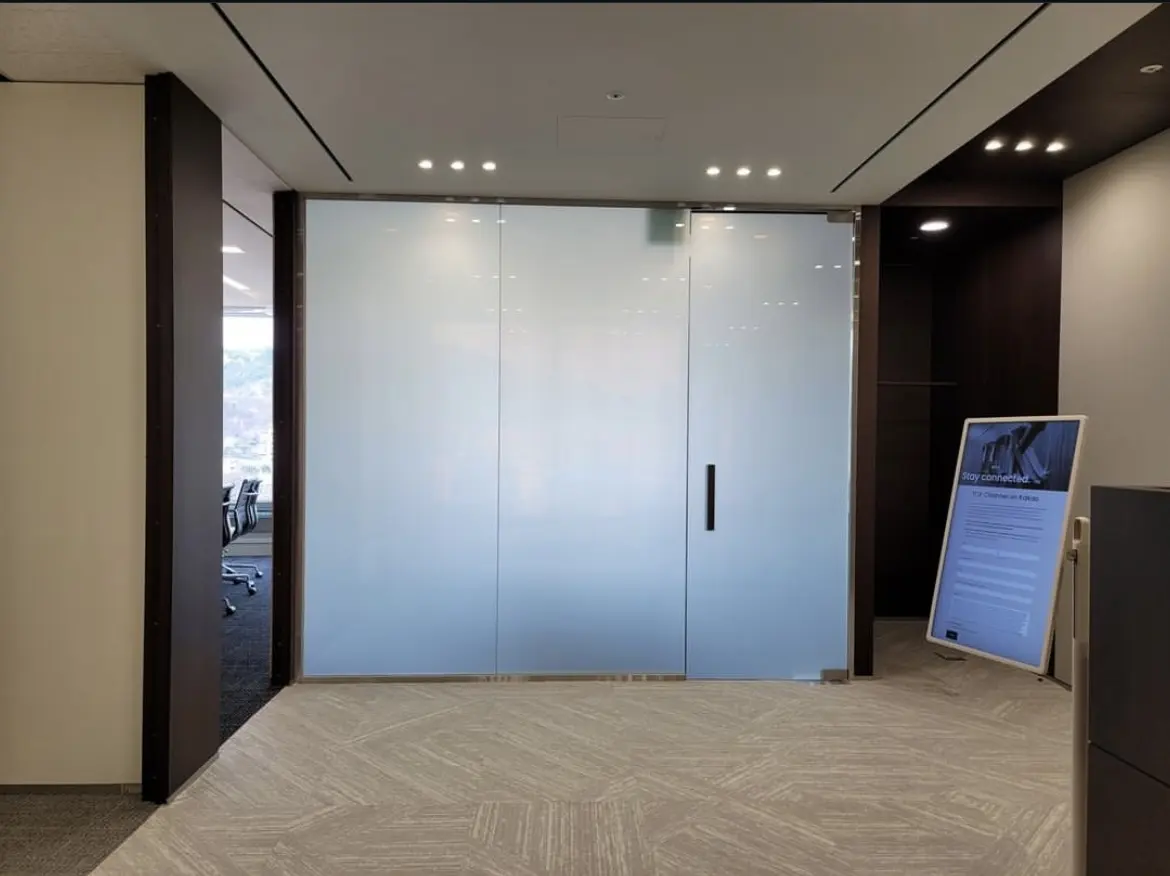
The Smart Privacy Glass
Office Cabin with switchable glass panel
Balcony Door with switchable glass
Switchable glass is widely recognised as a smart glazing solution due to its dynamic transparency control. Unlike ordinary clear or frosted glass, it offers adjustable privacy without the need for curtains, blinds or additional fittings.
Switchable glass is valued because:
It provides instant privacy at the touch of a switch
It allows natural daylight while maintaining discretion
It enhances modern, minimalist interior design
It reduces glare and solar heat gain
It blocks up to 99% of harmful UV rays
It integrates with smart home and automation systems
This makes switchable glass ideal for bathrooms, bedrooms, meeting rooms, office partitions, consultation rooms and retail environments.
Use of Switchable Glass in Singapore
Common Applications
- HDB and condo bathroom panels
- Bedroom partitions
- Office meeting rooms
- Retail storefront displays
- Medical and dental consultation rooms
- Boardrooms and executive offices
- Glass doors and façade systems
- Projection screens and display panels
In commercial spaces, it can function as a projection surface when opaque, making it suitable for presentations and digital displays.
In residential properties, it removes the need for bulky blinds, maximising space while maintaining privacy.
It is also suitable for upgrading existing glass panels using smart film without full panel replacement.
Switchable Glass Technology
For Singapore’s high-density urban environment, flexibility of such a smart glass makes it both practical and future-ready. Switchable glass is available in two main formats:
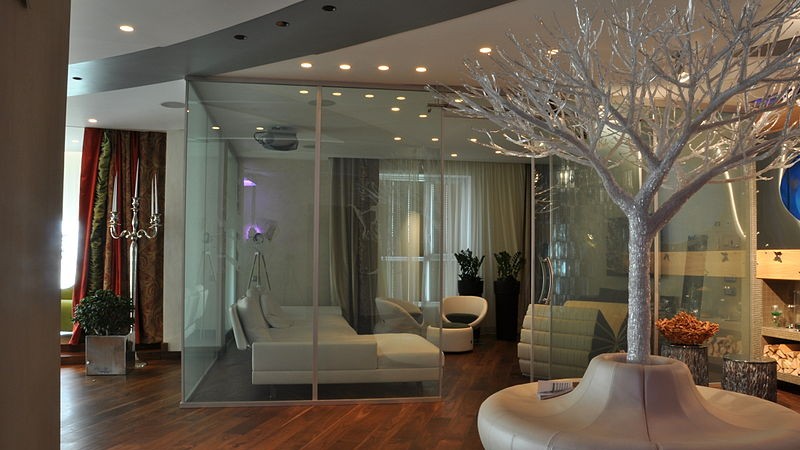
Smart Glass enclosure without privacy
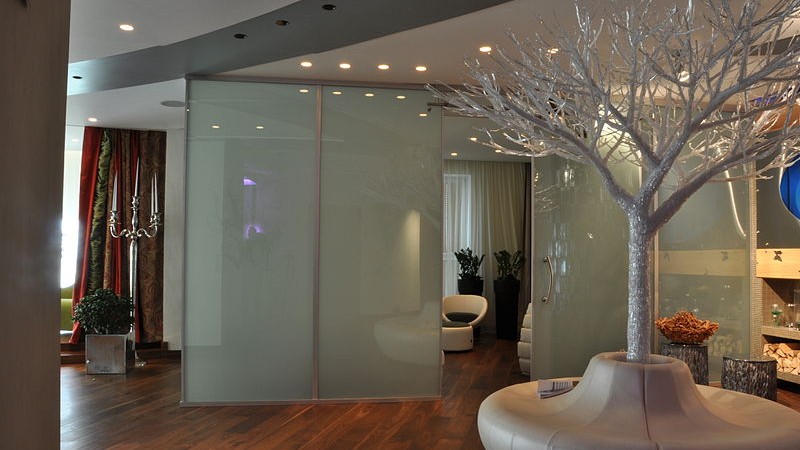
Smart Glass enclosure with privacy
Integrated Switchable Glass Panels
Factory-laminated units where the PDLC layer is permanently bonded between tempered or laminated glass sheets under controlled heat and pressure.
Switchable Smart Film
A thin PDLC (Polymer Dispersed Liquid Crystal) film is embedded between glass panels or applied as a smart film onto existing glass, converting standard glass into switchable glass. When electrical current flows through the layer, liquid crystals align and the glass becomes transparent. When power is switched off, the crystals scatter light, turning the glass opaque.
Typical electrical requirements range from 48V to 60V AC with low power consumption during operation. Switching speed generally ranges between 50 to 200 milliseconds depending on system configuration. The transition occurs within milliseconds, allowing seamless control over privacy and light transmission.
Benefits of PDLC Technology
- Immediate clear-to-opaque switching
- Maintains light transmission even in opaque mode
- Blocks up to 99% of UV rays
- Supports energy efficiency by reducing glare
- Compatible with wall switches, remotes and automation systems
Thickness & Specification Guide
Selecting the correct specification ensures safety, durability and compliance with Singapore building requirements. Thickness depends on installation height, panel size and intended application.
Typical Use | Specification | Composition |
Residential partitions | 9.5 mm | 5 mm glass + PDLC + 5 mm glass |
Office meeting rooms | 11.5 mm | 6 mm glass + PDLC + 6 mm glass |
High-traffic commercial | 13.5 mm | 6 mm tempered + PDLC + 6 mm tempered |
Retrofit film | 0.2 mm – 0.3 mm | Applied onto existing glass |
Customisation Options Available for Switchable Glass
Switchable glass systems can be tailored to suit a wide range of architectural and operational requirements. From enhanced safety and acoustic performance to aesthetic finishes and automation features, these upgrades provide flexibility for both residential and commercial applications. Customisation ensures the system aligns with structural standards, energy efficiency goals, and user convenience expectations.
Switchable glass systems can be customised with:
- Tempered safety glass combinations
- Laminated safety configurations
- Acoustic-enhanced panels
- Tinted or solar-control finishes
These options allow homeowners, designers, and facilities managers to match safety, privacy, and design objectives seamlessly.
Maintenance for Switchable Glass
Switchable glass is engineered for long-term durability, even in Singapore’s humid environment and high-UV exposure conditions. When professionally installed, the system requires minimal upkeep and maintains consistent performance over time. Routine care helps preserve optical clarity, electrical reliability, and overall lifespan.
Recommended maintenance guidelines include:
- Clean with mild soap and water using a soft cloth
- Avoid abrasive cleaners or harsh chemicals
- Ensure electrical components remain dry and properly sealed
- Conduct periodic inspection of wiring connections
With proper care, switchable glass systems typically last 10 to 15 years or longer and can support millions of switching cycles without performance degradation.
Switchable Glass Price Guide
Pricing varies depending on panel size, thickness, electrical configuration and installation complexity.
Type | Estimated Price | Typical Use |
Smart film retrofit | From $800 – $1,500 + per panel | Existing glass upgrades |
Integrated switchable panels | Custom quotation | New installations |
Large commercial systems | Project-based pricing | Offices and retail |
Emergency replacement | Subject to assessment | Damaged smart panels |
*Estimates only, actual pricing determined only after knowing detailed requirements and consultation
Typical Switchable Glass Project Costs in Singapore
- HDB bathroom privacy upgrade: $1,200 – $2,500
- Condo bedroom partition: $2,000 – $4,500
- Office meeting room system: $4,000 – $12,000
- Retail storefront installation: $6,000 – $20,000+
Final costs depend on panel dimensions, wiring access, automation integration and site conditions.
Installation & Regulatory Guidelines
Installing switchable glass requires both glazing expertise and proper electrical planning to ensure safety, system reliability, and regulatory compliance. Professional coordination between glass specialists and licensed electricians is essential to achieve optimal performance and long-term durability.
Typical Installation Process
A standard installation typically follows these stages:
- On-site inspection and measurement
- Recommendation of suitable specification
- Electrical assessment and power planning
- Detailed quotation and approval
- Fabrication or film preparation
- Installation and wiring integration
- System testing and commissioning
- Final inspection and handover
Emergency replacement may be arranged, subject to system compatibility and site accessibility.
Frequently Asked Questions
What is the difference between switchable glass and frosted glass?
Frosted glass is permanently opaque. Switchable glass changes from clear to opaque instantly using electrical control.
Can switchable glass be installed on existing windows?
Yes. Smart film can be applied to existing glass panels without full replacement.
Is switchable glass safe for bathrooms?
Yes, provided electrical components are properly sealed and installed according to safety standards.
Does switchable glass reduce heat?
It helps reduce glare and UV exposure, improving indoor comfort in Singapore’s climate.
Can switchable glass break?
Yes, like all glass products. When combined with tempered or laminated configurations, it meets safety requirements.
How long does switchable glass last?
With proper installation and maintenance, systems typically last 10 to 15 years or longer.